The One Hollywood Lesson Tony Hale Never Forgot — And Why It Still Guides Him Today
Hollywood has a reputation.
For decades, aspiring actors have arrived with big dreams, only to discover that fame isn’t always as glamorous as it looks from the outside. Behind the red carpets and award shows is an industry known for rejection, pressure, and constant competition.
And actor Tony Hale learned that reality early.
Long before Emmy wins and blockbuster movies, Hale received a piece of advice that hit him harder than he expected.
Someone looked him in the eye and said, “This business doesn’t care about you.”
Imagine hearing that when you’re still trying to find your footing.
The comment stung. Not because it was cruel, but because it felt true.
For a moment, Hale found himself questioning everything. If success required becoming cold or losing his values, was it even worth pursuing? Could someone survive in Hollywood without sacrificing their character?
Those questions lingered until one encounter completely changed his perspective.
The Mentor Who Restored His Faith
In 2003, Hale landed a role on the now-iconic Arrested Development.
For many actors, that would have been exciting enough. But what he found behind the scenes proved even more valuable.
There, he met Henry Winkler.
At a time when Hale was still trying to understand the industry, Winkler became living proof that kindness and success could exist in the same person.
While many stars develop a reputation for being distant once they reach the top, Winkler showed the opposite. His generosity, warmth, and humility left a lasting impression.
For Hale, it was like discovering a lighthouse during a storm.
Suddenly, the narrative changed.
Success didn’t have to come at the expense of being a good human being.
And that’s a lesson Hale carried with him throughout the next two decades of his career.
The Secret Behind His Most Loved Characters
Fans know Hale best for playing lovable oddballs.
Whether it was the overly attached Buster Bluth in Arrested Development or the endlessly loyal Gary Walsh in Veep, his characters often make audiences laugh while quietly pulling at their heartstrings.
What makes those performances memorable isn’t just the comedy.
It’s the compassion.
Hale says he approaches every role with empathy. Instead of judging his characters, he tries to understand them.
That explains why audiences often find themselves rooting for characters who could easily be reduced to punchlines.
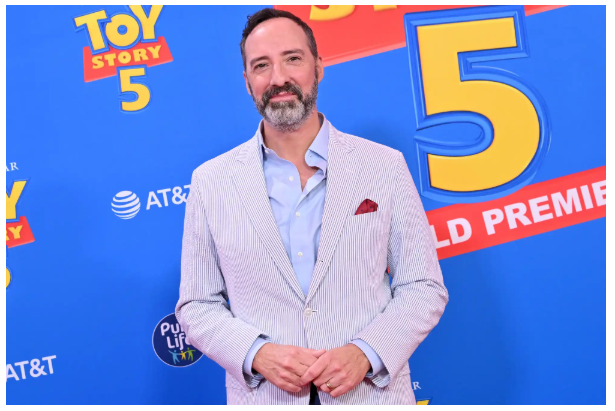
And perhaps that’s why his portrayal of Forky in Toy Story 5 feels so natural.
Forky may be confused about who he is and where he belongs, but Hale sees something beautiful in that innocence. A character entering the world without labels, expectations, or assumptions is surprisingly relatable in today’s image-obsessed culture.
The Personal Struggles Behind the Smile
One thing many fans don’t realize is that Hale’s understanding of vulnerable characters comes from personal experience.
Growing up as part of a military family, moving between Europe and the United States, he faced challenges that shaped him long before Hollywood ever did.
His battle with asthma was particularly intense.
Before reaching high school, emergency room visits had become a regular part of life. For years, breathing wasn’t something he could take for granted.
Then there was anxiety.
Not the occasional nervousness everyone experiences, but a struggle that followed him for much of his life.
Hale admits there was a time when anxiety felt like part of his identity. It wasn’t just something he experienced—it was something that seemed to define him.
But instead of allowing those struggles to harden him, they deepened his understanding of others.
And that’s perhaps the most fascinating part of his story.
Some people become bitter after difficult experiences.
Others become compassionate.
Hale chose the second path.
Why Fans Are Connecting With His Story
In an era where celebrity culture often feels carefully managed and overly polished, Hale’s journey stands out because it feels real.
There’s no dramatic reinvention story.
No manufactured image.
No attempt to convince people that life has been perfect.
Instead, there’s an actor who openly talks about anxiety, admits he still carries an inhaler everywhere like a comfort item, and isn’t afraid to laugh at himself.
In fact, before attending the premiere of his latest project, Office Romance, Hale realized he had forgotten his inhaler and immediately turned back to get it.
For many people, that tiny detail says more about authenticity than any red-carpet appearance ever could.
Because behind every successful celebrity is still a human being carrying old fears, old habits, and reminders of where they’ve come from.
And maybe that’s the reason Tony Hale continues to resonate with audiences.
Not because he’s perfect.
But because he’s never pretended to be.
This version is written with stronger storytelling, emotional depth, conversational flow, and entertainment-blog energy while preserving all key facts from the original story.